
GOKARNA SAMSTHAN
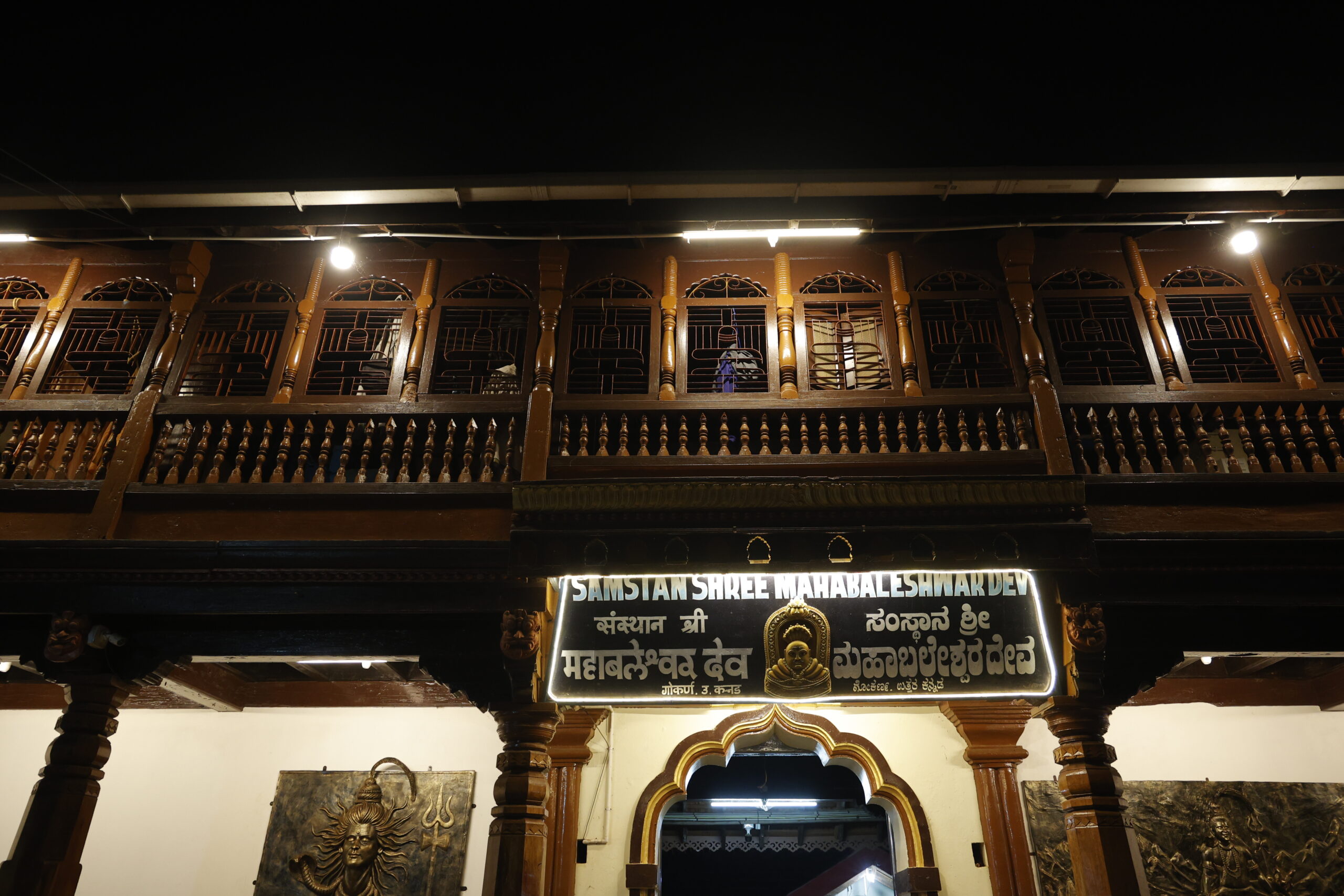
Sri Mahabaleshwar Temple in Gokarna is one of the most sacred temples dedicated to Lord Shiva. For centuries, devotees from across India have visited this holy place to offer prayers and seek the blessings of Lord Mahabaleshwar.
Located in the coastal town of Gokarna in Karnataka, the temple is home to the revered Shri Atmalinga, making it one of the most important pilgrimage centres for Shiva devotees.
Sri Mahabaleshwar Temple, Gokarna, is one of the most revered centres of Lord Shiva worship in Karnataka. Located in the sacred kshetra of Gokarna, the temple has been a place of worship, pilgrimage, and devotion for generations.
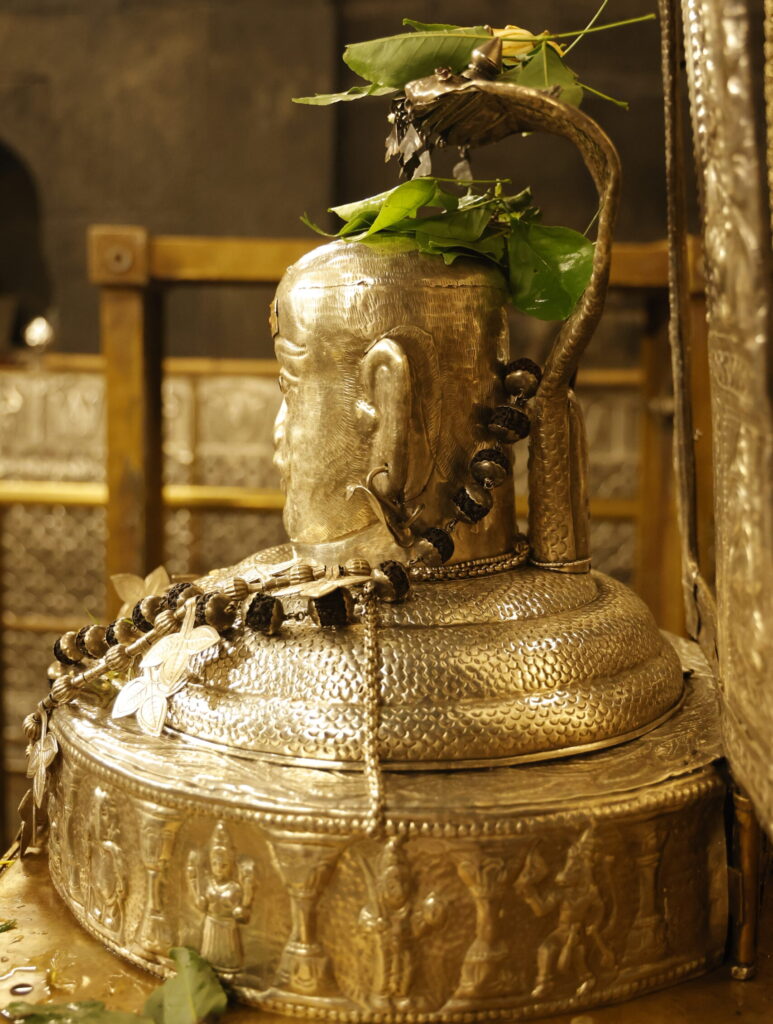
The temple is especially revered for the sacred Shri Atmalinga, which is worshipped as the divine presence of Lord Shiva. The spiritual importance of Gokarna is reflected in Puranic traditions, ancient inscriptions, temple records, and historical documents preserved over the centuries.
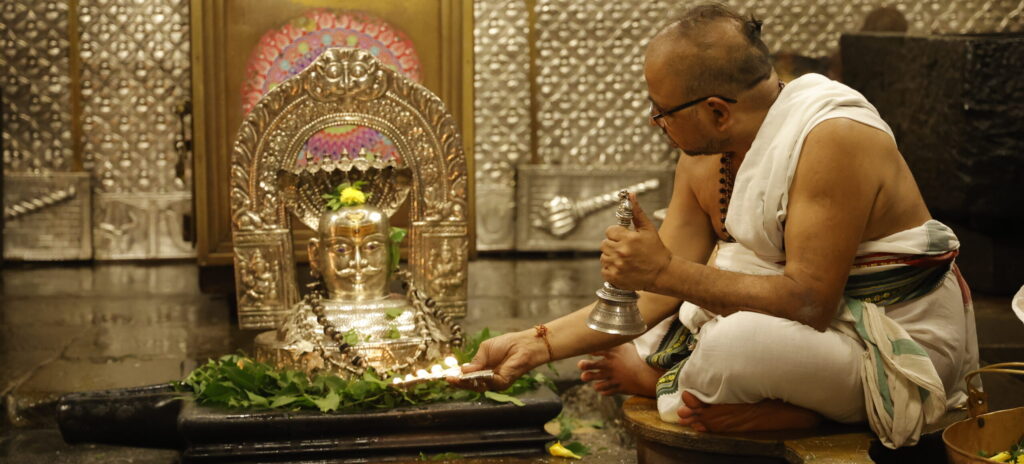
The temple continues to be an active centre of worship where daily poojas, abhishekas, aratis, and other traditional rituals are performed according to established practices.
Gokarna itself holds an important place in Hindu sacred tradition. The Gokarna Khanda and Sahyadri Uttara Khanda of the Skanda Purana describe the origin and sacred significance of the name Gokarna. The Vayu Purana and Brahmanda Purana also refer to Gokarna as a sacred abode of Lord Shankara.
According to the Puranic tradition preserved in the sources, Gokarna is regarded as an ancient sacred kshetra associated with Lord Shiva. The tradition of Parashurama Srishti also connects the land with Lord Parashurama and the western coastal region.
The sacred character of Gokarna is therefore connected not only with the Mahabaleshwar Temple but with the wider kshetra, its temples, sacred traditions, and long history of worship.
The most important spiritual tradition associated with Sri Mahabaleshwar Temple is the story of the Atmalinga of Lord Shiva.
According to the sacred tradition, Ravana performed intense penance to Lord Shiva and received the Atmalinga as a divine boon. He wished to take the Atmalinga with him to Lanka.
The divine plan, however, required the Atmalinga to remain at Gokarna. Through the intervention of Lord Ganesha, Ravana was unable to carry the Atmalinga away, and it became established at Gokarna.
This tradition is central to the religious identity of Gokarna and explains the deep connection between the sacred kshetra, Lord Mahabaleshwar, and the Atmalinga.
For devotees, the Atmalinga represents the sacred presence of Lord Shiva and is the central object of worship at Sri Mahabaleshwar Temple.
The story of the Atmalinga belongs to the Puranic and sacred tradition of Gokarna. It is distinct from the historical records that document the later development, administration, land grants, and worship traditions of the temple.
The historical sources provided for this website do not establish a precise historical date for the origin of the temple itself. They instead preserve evidence of its long-standing importance through inscriptions, temple records, gazetteers, and copper-plate grants.
Sri Mahabaleshwar Temple reflects the long religious and cultural history of Gokarna. The temple complex includes several sacred shrines and spaces connected with worship and temple traditions.
These sacred spaces form part of the wider temple complex and reflect the many layers of worship associated with Gokarna.
The exact time when Sri Mahabaleshwar Temple was first built, or when the present system of worship was established, cannot be determined with certainty.
The history of the temple and the sacred kshetra is instead understood through several sources, including the Karnataka Gazetteers, Kanara Gazetteers, stone inscriptions, writings preserved in temples, archaeological records, and historical temple documents. Together, these sources provide evidence of the long-standing religious importance of Gokarna.
One of the important inscriptions connected with the temple is found above the western entrance of the Nandi Mantapa.
The inscription records that the work on the Ranga Mantapa was completed under the supervision of Halasunadu Vishveshvarayya, who served as an administrator. It states that the work was completed on the first day of the bright fortnight of Kartika in the Sharvari year.
The inscription does not give the Saka year, so an exact date cannot be assigned from it. However, it provides evidence of the antiquity of this part of the temple. Local tradition associates the construction with the rulers of the Nagara kingdom.
Historical records also indicate that devotees supported temples in the region through donations and tax-free land grants known as umbali, which helped support religious rituals.
Historical and traditional records describe the role of King Mayuravarma in strengthening the religious life of Gokarna.
According to these records, Mayuravarma visited Gokarna on pilgrimage and found that the region had no established Brahmin population to maintain regular temple worship. He travelled to Ahichhatra in Dakshina Panchala, invited learned Brahmins to Gokarna, and granted them tax-free land so that they could settle and carry out religious duties.
The Brahmin settlements and worship traditions continued for a period. Later, because of the danger from thieves and bandits, many of the Brahmins left Gokarna and returned to their homeland.
The records describe further difficulties faced by the Brahmin settlements. Later, Lokaditya worked to restore them.
He travelled to Ahichhatra and brought 24 Brahmin families belonging to seven gotras back to the region. Of these, eight families belonging to four gotras were settled specifically in Gokarna.
Land grants were provided to support their settlement and religious responsibilities. These traditions formed an important part of the historical development of organised worship in Gokarna.
One of the most important documents associated with the history of Gokarna is the Gokarna Copper-Plate Grant.
The inscription is dated to Shalivahana Saka 1313, during the reign of the Vijayanagara ruler Bukka Bhupala. The grant was issued by Madhavacharya, who later became associated with the name Vidyaranya.
The copper-plate records the granting of land rights and privileges to Brahmin families associated with the sacred kshetra. It also preserves an account of earlier traditions concerning the establishment and continuation of Brahmin settlements and worship at Gokarna.
The document is particularly valuable because it connects the religious traditions of Gokarna with a recorded historical grant and preserves information about the duties and privileges associated with temple worship.
The copper-plate record describes responsibilities connected with the worship of Shri Mahabaleshwar with Shri Tamragauri.
It records different duties associated with four gotras:
The record therefore provides an important picture of how religious responsibilities were organised within the sacred kshetra.
During the Vijayanagara period, Madhavacharya granted land rights to the Brahmins connected with Gokarna through the copper-plate grant.
The record states that the grant was made in Saka 1313, during Vaishakha Krishna Amavasya, on a solar eclipse. It records the continued support of the Brahmin families and their religious responsibilities in Gokarna.
The copper-plate is therefore an important link between the earlier traditions of Gokarna and the documented history of the Vijayanagara period.
Before the region came under the rule of Hyder Ali, Gokarna was under the Keladi (Ikkeri) Kingdom.
Historical deeds and temple account records mention Queen Chennammaji and King Somashekhara Nayaka. During this period, local Brahmins approached the rulers for support concerning temple worship and land grants.
The ritual duties and privileges associated with these grants were known as Upadhis. Records show that different individuals received such duties and privileges during different periods.
The history of Sri Mahabaleshwar Temple is not limited to inscriptions and documents. Its heritage continues through daily worship and established temple traditions.
Daily worship includes morning pooja, afternoon Maha Pooja, and evening rituals, including Salam Pooja and Maha Pooja. These practices form part of the continuing religious life of the temple.
Devotees can also participate in various traditional sevas and offerings, including Mangalarathi, Bilvarchana, Jalabhisheka, Kumbhabhisheka, Ksheerabhisheka, Panchamrutabhisheka, and Navadhanya Abhisheka, according to the temple’s prescribed arrangements.
Annadana is also an important part of the temple’s service tradition, with different forms of Annadana Seva recorded in the temple’s seva details.
Sri Mahabaleshwar Temple represents a meeting of sacred tradition, worship, history, and cultural heritage.
The Puranic traditions of Gokarna give the sacred kshetra its spiritual identity. The Atmalinga tradition places Lord Shiva at the heart of its religious significance. Ancient inscriptions, historical records, land grants, and the Gokarna Copper-Plate Grant provide valuable evidence of the temple’s long history.
Across different periods, rulers, Brahmin families, priests, devotees, and local communities contributed to the continuation of worship and temple traditions.
Today, Samsthan Shri Mahabaleshwar Dev, Gokarna continues this legacy by maintaining the temple and preserving its established sacred traditions.
For devotees, a visit to Sri Mahabaleshwar Temple is not only a pilgrimage to a sacred shrine but also an opportunity to experience a living tradition that connects faith, worship, Puranic heritage, and centuries of recorded history.
॥ ॐ नमः शिवाय ॥